
Welcome to the fourth edition of Hooked!, Binding Hook’s monthly current events newsletter. In Hooked!, we draw on our latest publications and growing archive of expert research, analysis, and commentary to reflect on a recent security and technology event.
In one of the most highly talked-about papers presented at this year’s CyCon (that is, the NATO Cooperative Cyber Defence Centre of Excellence’s annual International Conference on Cyber Conflict), Volodymyr Styran of the Ukrainian State Cyber Protection Center called for increased regulation of access to ‘Western technological resources’ and accountability from tech companies that provide services and information to developers in ‘high-threat areas.’ He found that Russian mobile applications with military uses rely on Google’s Android platform and a wide range of cloud service providers and meteorological and cartographic services based in the United States, Western Europe, and even, in one case, in Ukraine.
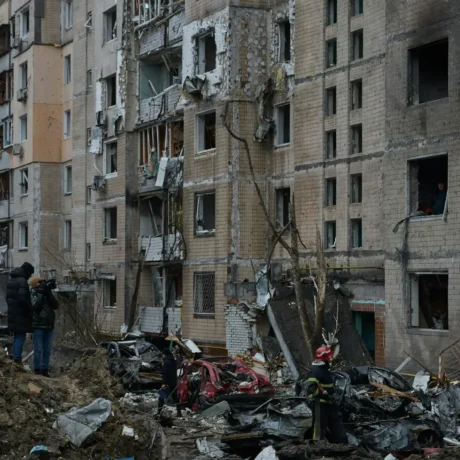
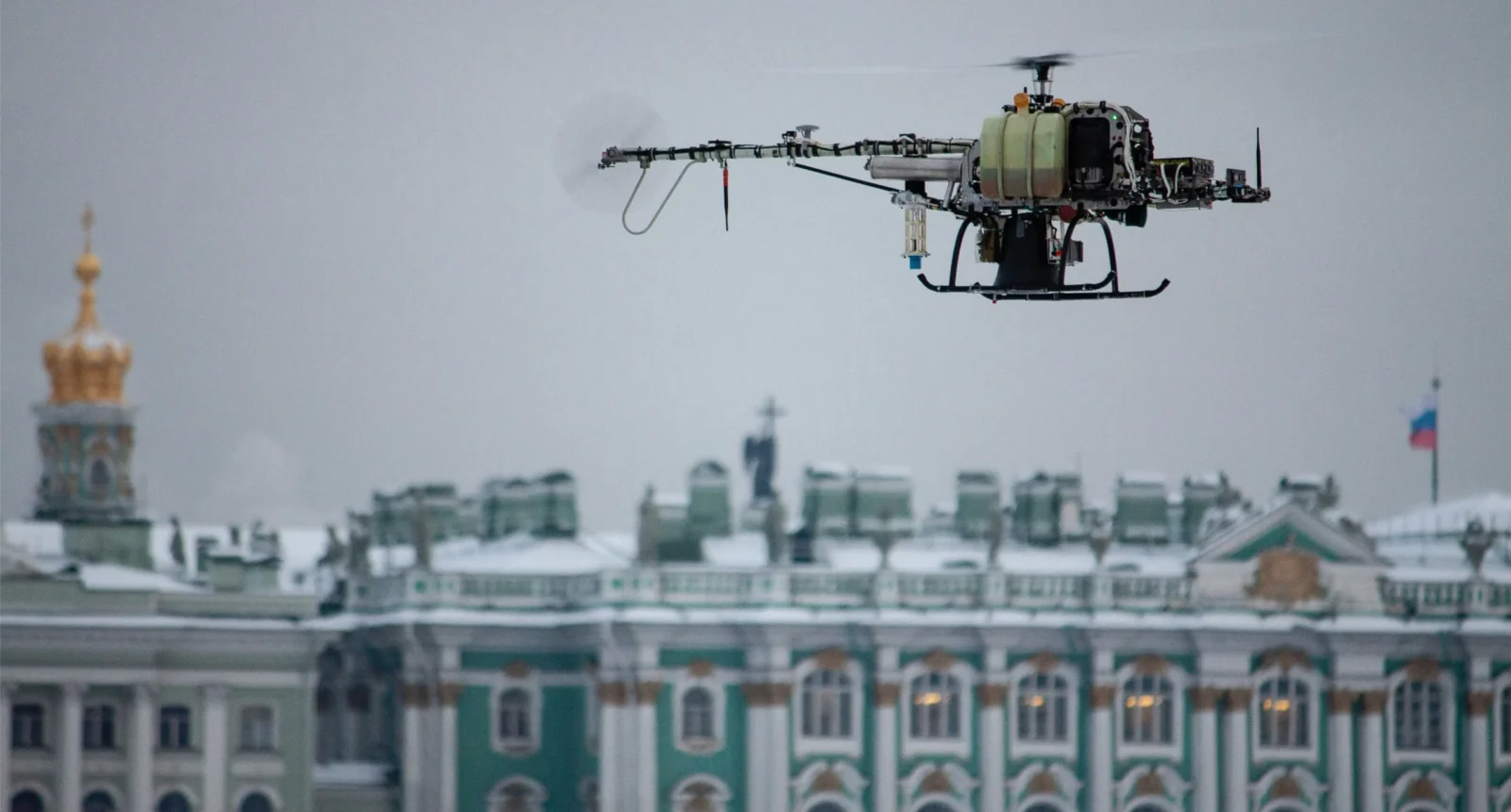
These apps contribute to drone targeting, calculating explosives, and even artillery firing, and are widely used, despite largely being created by civilian developers outside of the military. It’s easy to see why Styran would call for preventative measures as Ukraine is terrorised by constant artillery and drone strikes, regularly leaving children and other civilians dead and wounded.
He calls for a number of actions, including some immediate practical steps: cloud service providers should ‘proactively identify military usage in high-threat areas in the way current measures against universally illegal activities, such as child exploitation content, are implemented,’ and governments should ‘create official reporting channels for national CERT [community emergency response team] teams to flag military applications from high-risk areas for review and possible removal.’
However, Styran also calls for ‘legal accountability for cloud providers that offer services to unverified or malicious users in high-risk areas’, and for cloud service providers to ‘enhance verification processes for user origins’ and ‘implement geofencing for high-threat areas’. He additionally suggests that software development kit and development ecosystem providers (ie Google) limit access for users from high-threat areas and ‘restrict access to sensitive APIs [application programming interfaces], including meteorological and geospatial services, exclusively to applications distributed through official app stores’.
These recommendations are provocative on several fronts.
The first is the classic sanctions criticism – geofencing and limiting access to high-threat areas is a blunt tool hitting everyone in a country. Sanctions on Iran, for example, seem to have worsened economic conditions for regular Iranians, while strengthening the power of the state. Limiting access to all Russians (at least those without the relatively straightforward means or ability to circumvent geofencing) would raise questions of proportionality and neutrality debated fiercely in the early days of the full-scale invasion, when Ukraine asked technical internet governance organisations to effectively cut Russia out of the global routing protocol DNS (they refused).
Second, further ‘decoupling’ from global cloud and app infrastructure could play into Vladimir Putin’s hands. Under Putin, the Russian government has been working for years to create a sovereign ‘RuNet’ with a fully Russia-based infrastructure – although with limited success: it has notably failed to develop competitive alternatives to Google services such as Android and YouTube. Amazon, Google, and Microsoft cutting off access could re-energise this project, leading to even more extreme censorship and government control over the internet in Russia.
Third is the question of taking sides. These companies have committed substantial support to helping Ukraine defend itself against the Russian invasion, as part of a wider public-private collaboration that raises ‘profound and uncomfortable’ questions for some. Should tech companies take such a stance in all conflicts? What actions should prompt this sort of response and who should decide? Their record to date is not wholly consistent either: Apple and Google removed an opposition voting app from their app stores in 2021 after Russian government pressure.
Finally, the main companies discussed by Styran are US-headquartered, and the current turbulence there could both help and hinder his argument. On one hand, it is unlikely that the role of US-made cloud services and apps is likely to make any impression on an already conciliatory and contradictory US negotiating position towards Russia. On the other hand, one of the top 10 most-used domains in the study data is nationalmap.gov, a project of the US Geological Survey (USGS). The Trump administration has plans to gut the USGS, and has been taking down various once-public databases and other resources. There at least, Styran might get what he wants, regardless of regulatory and accountability action.
Overall, Styran’s paper encourages us to revisit a set of recommendations published in 2023 by the International Committee of the Red Cross (ICRC) on tech in conflict. Among other things, the ICRC asked tech companies to be clearer about when their actions cross into ‘direct participation in hostilities’ and to segment military from civilian digital infrastructure. Styran’s findings suggest the former task is more urgent than anticipated and the latter task more difficult.
Ukraine isn’t waiting for debates about tech and international law though – as David Kirichenko recently wrote for us, the IT Army of Ukraine is still refining and democratising DDoS attacks, despite their ambiguous legal status.
Until next month,
Katharine Khamhaengwong
Binding Hook Editor
For more Binding Hook Russia analysis, read:
- Monica Kello’s exploration of the cultural forces behind Russia’s foreign cyber operations
- Mark Raymond and Justin Sherman’s look at a controversial United Nations cybercrime treaty put forward by Russia
- Daniel Salisbury’s writing on Europe’s struggle with Russian tech theft
- Jamie Collier’s piece on Russian threats to European elections
Related Posts

A new ‘turning point’ for Germany’s cyber posture?
22 November 2024

NATO must ‘contingency campaign’ in cyberspace
16 December 2025

Self-attribution as strategy in the Russo-Ukrainian War
9 October 2025