

In a widely discussed speech at Davos on 20 January, Canadian Prime Minister Mark Carney stated that the international system was ‘in the midst of a rupture, not a transition’. These comments followed the Donald Trump administration’s military intervention in Venezuela, military threats over Greenland, and the combative 2025 National Security Strategy.
The post-Cold War world order consisted of a liberal international system anchored in multilateral institutions, rules-based cooperation, and Western leadership, with shared frameworks for addressing transnational challenges such as public health and democracy. With values centred on the acceptance of empirical expertise, democratic governance and human rights, and the belief that complex collective problems were solvable through international cooperation. That consensus has been eroding since 2016, but the pace of that deterioration accelerated dramatically in 2025.
While there are multiple causes for this, one is particularly visible: the rise of large technology companies whose infrastructure, resources, and global reach have allowed their leaders to become powerful new actors. Tech barons now act as state proxies, adopt roles in government, and flaunt their access to political decision-makers. Some control infrastructure that was once solely the domain of states, such as nuclear reactors built to support AI data centres. Observers have pointed to these companies’ political aspirations, geopolitical impact, and implications for the future of the international system, noting that tech barons use their resources to shape when, how, and which policy issues are considered – acting as the ‘stage on which such politics unfold’, rather than as participants themselves.
Tech companies have emerged as a new set of privately owned international institutions, challenging the diplomatic and legal institutions of the pre-existing international system. The current US administration has embraced this; a key plank of Trump’s foreign policy has been supporting US tech companies in their battles with older institutions, most notably the EU.
More than the influence of individual companies, it is the emergence of this rival set of institutions – what former US President Joe Biden termed the ‘tech-industrial complex’ in his January 2025 farewell address – that is reshaping the international order.
Today’s tech is different
Powerful commercial actors appear throughout history, from the British and Dutch East India companies to the United Fruit Company. Their vast multinational influence, however, was tied to physical resources, territorial control, and relatively slow-moving infrastructure. Today’s tech leaders, by contrast, have far greater reach, including instant and continuous access to – and control over – global digital platforms. They can go beyond lobbying and coercion to fundamentally reshaping the information environment within which public opinion, markets, and democratic processes operate.
This capacity to distort internationally shared realities and norms and to influence and evade their own regulatory constraints, makes tech barons uniquely critical actors in the erosion of the contemporary world order.
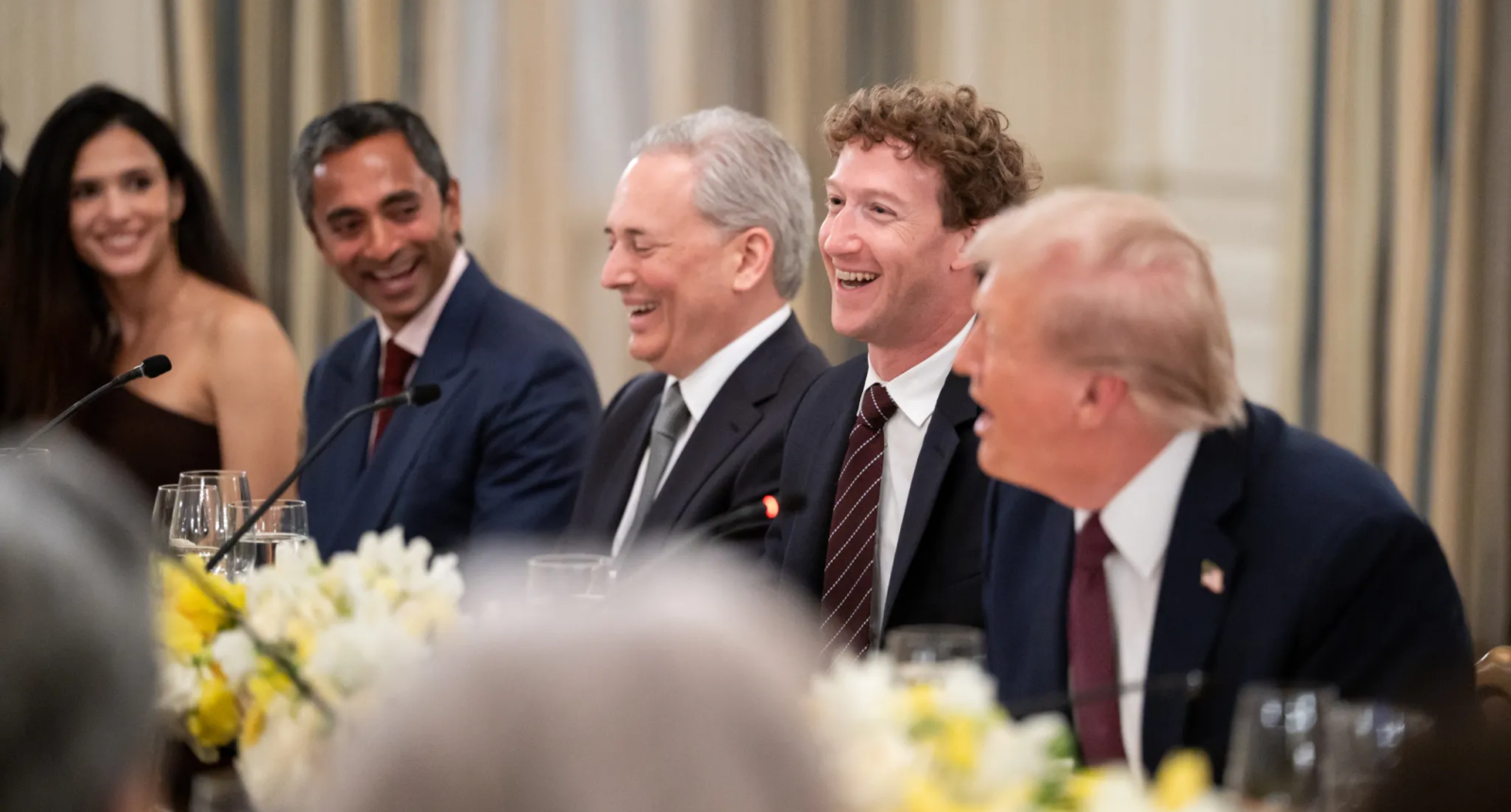
Trump has long enjoyed a close personal relationship with many of the individuals who founded and run these companies and whose wealth has supported his presidential campaigns and his subsequent administration. Four of the five richest men in the world attended Trump’s second inauguration: Meta’s Mark Zuckerberg, Amazon’s Jeff Bezos, Alphabet’s Sundar Pichai, and Tesla/SpaceX/X’s Elon Musk.
These tech barons have likewise benefitted from their proximity to traditional levers of power, most clearly shown by Musk’s former role as head of the Department of Government Efficiency (DOGE). While he was there, numerous federal regulatory and investigative cases that had been open against Musk’s businesses were curtailed or slowed as agencies that had oversight over his companies saw staffing cuts or budget slashes.
Meanwhile, Trump’s foreign policy has increasingly positioned the defence of American tech corporations as a central theme in transatlantic relations, especially in conflicts over technological regulation. His administration publicly criticised the EU’s digital regulatory framework, including the Digital Services Act and Digital Markets Act, as discriminatory and harmful to US tech giants. It argued that EU regulations impose unfair compliance costs and censorship-like constraints on US firms.
The US also threatened retaliatory measures, including tariffs, if EU policies continue to target US tech companies and has launched diplomatic efforts to push European governments to amend or repeal these regulations. Trump treats technology leadership and market dominance as the foundation of national power and economic security, challenging the older emphasis on multilateral regulatory norms.
Musk’s calls for the EU to be abolished are only the most publicly vitriolic example of the antipathy between these tech companies and the older diplomatic and legal institutions. By rallying behind American tech interests against the US’s international partners, Trump eschews previous multilateral alliances, instead aligning US policy with Silicon Valley priorities.
Tech and coercion versus law and multilateral diplomacy
This analysis also provides a possible explanation for Trump’s recurrent resort to military action and threats: he prefers a world order that eschews legal and diplomatic engagement and recognises coercive capacity and technological dominance as the main currencies of power. While the latter is the domain of the tech barons, it is in the former, the world of hard military power, that the US government is pre-eminent.
If this theory is correct, the rapid series of demonstrative military operations by the US in the latter half of 2025 may reflect an attempt by Trump to reassert the hard power of the state amid an unsettled relationship with key tech barons such as Musk. Having ridden these companies’ support to power, Trump may feel threatened by them and feel the need to demonstrate to those companies (and to other states) the tangible power that he has at his disposal. Doing so may be intended to reinforce the idea that the US is not reliant on these new players, despite the fact that their involvement is now vital for actioning any government decisions. They are no longer simply external commercial partners or instruments of the state.
Trump’s military focus and disregard for international law would, in this view, reflect his perception that the primary locus of power is shifting away from multilateral agreements and international coalitions and towards individual ‘strongmen’, be they the leaders of states or tech companies.
Europe responds
A structural analysis would ask whether this level of insecurity was not Trump-specific but rather a natural response by states to the rise of a new set of powerful actors and a rival set of institutions. This shift into a world where tech agendas so greatly influence government actions has been rapid. The distortions we are seeing now may be the delayed response to the unexpected rise of these actors in the international system.
If this is the case, then perhaps the US was simply the first of the countries that had previously participated in the international rules-based order to take action. Maybe Trump’s actions are an early, blunt attempt by a state to reassert hierarchy and hegemony under conditions of uncertainty created by the rise of these new actors.
It is suggestive that even as Europe emphasises its commitment to multilateral institutions and international law, it is simultaneously attempting to strengthen its technological and military power. European states are considering pooling investments in military and technological power as a counterweight to the current concentration of these resources and capabilities with US companies. In January 2026, the EU announced a €307.3 million investment to support the development of AI, robotics, quantum technologies, photonics, and digital infrastructure aimed at strengthening European digital sovereignty and innovation capacity.
Faced with a powerful set of new institutions, even states in favour of the old system are hedging their options. For now, they will continue to encourage the growth of their domestic technology industries and try to find their place in a new balance of power and on a new world stage – where they are not the only actors.
The views expressed are the authors’ own and do not represent the official positions of their current or former employers.