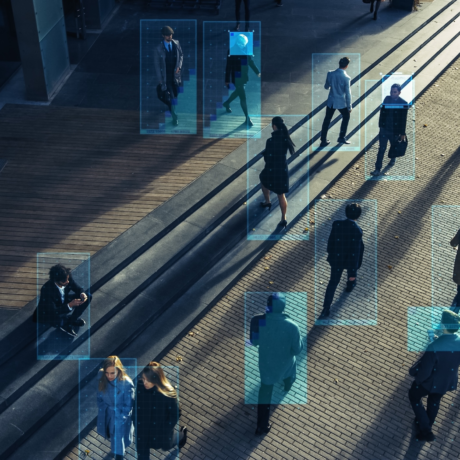




How much surveillance can a democracy absorb before it begins to reshape the very trust it’s meant to protect? Across democracies, surveillance has become the cornerstone of domestic security. In the UK, the Investigatory Powers Act grants sweeping access to online behaviour, while in the US, post-9/11 domestic monitoring programmes have evolved into sophisticated data collection from private brokers. France introduced real-time AI video surveillance during the 2024 Olympic Games, raising concerns about how ‘temporary’ security measures become permanent. And Israel advanced new laws permitting authorities to access any stationary camera, public or private, whenever national security is invoked.
These developments promise safety, but they also recalibrate the emotional connection between citizen and state, shifting from an understanding of necessary protection by the government to a wariness of pervasive monitoring being done in the name of the same. As surveillance spreads into our homes, streets, and even our online searches, the boundary between public safety and private life starts to fade. This shift raises a crucial question: how does surveillance, as a counterterrorism effort, change us – emotionally, cognitively, and civically?
Surveillance is emotional
After terrorist attacks, public support for surveillance typically surges. For instance, in the aftermath of 9/11, the share of Americans willing to sacrifice some freedom in favour of counterterrorism policies jumped to 71%, up from just 33% in May of that year. Fear makes people more willing to trade privacy for protection. The emotional calculus is simple: if being watched prevents violence, it’s worth the cost.
But this cost is not evenly perceived. While some citizens experience surveillance as a form of reassurance, others interpret it as a violation, an intrusion into personal autonomy or a sign of targeted suspicion. The constant knowledge that one’s actions, whether in public or private settings, are subject to scrutiny can lead to a pervasive sense of vulnerability, heightened anxiety, and perceptions of threat. What matters is not just whether we’re being watched, but by whom, where, and why. Being monitored in private spaces, like homes or personal workspaces, triggers stronger emotional reactions than being watched in public. And the tools used matter too, particularly when paired with AI-driven behaviour detection or predictive analytics as these technologies permit mass surveillance by tracking individuals’ movement, often without their consent.
The political brain
In ‘The Political Brain’, a recent collaborative study we led at the University of Haifa and Reichman University, we used fMRI and behavioural methods to examine how different types of surveillance affect emotional and political responses. We observed that surveillance in private spaces, through personal computer cameras for example, triggers strong emotional responses, such as anger and fear – responses that shape trust, compliance, and dissent. These reactions illuminate what we call the political brain: the neural and emotional interface through which surveillance reshapes how people judge the legitimacy of the state and decide whether to comply, or resist.
Initial analyses of the fMRI data show that the brain responds differently to face recognition technologies depending on the context in which they are encountered. When comparing private versus public conditions, activity increased in the amygdala, a region of the brain that processes emotions such as fear and vigilance. Specifically, face recognition in private contexts heightened amygdala activity, while face recognition in public contexts reduced it. This pattern suggests that the emotional impact of face recognition depends strongly on whether it is experienced in a private or a public setting. These neural patterns help us map the political brain in action, revealing how seemingly technical tools like surveillance can produce emotional reactions with long-term political consequences.
The link between surveillance, emotions, and political behaviour
Anger, fear, and threat perception are closely related to feelings of injustice and trust, which help shape whether citizens choose to participate in collective action, whether through protest, activism, or public cooperation. The Black Lives Matter movement demonstrates how perceived injustice acts as a catalyst for collective action: when individuals interpret systemic treatment as unfair, their shared grievances become the basis for organised, collective efforts to demand accountability and social change.
When it comes to surveillance, if it is experienced as protective, then it reinforces civic trust and compliance, but if it is experienced as coercive or unjust, it leads to political disengagement, dissent, or even radicalisation. People who feel unjustly targeted may withdraw from public life or resist policies they perceive as illegitimate. For instance, after the 9/11 terrorist attacks in the US, heightened surveillance led many Muslim Americans to avoid public activities, including attending mosques or participating in civic engagements out of fear and suspicion. In London, facial recognition trials sparked outcry over racial bias and misidentification.
Ultimately, feeling observed does not only affect momentary political behaviour. Being observed triggers emotional reactions that can reshape how people judge the state’s legitimacy and the trust they place in its decisions. Over time, these shifts affect political participation, levels of polarisation in society, and support for democratic norms.
The real risk: mistaking control for resilience
As governments deploy more intrusive technologies to respond to hybrid threats, the political consequences of being watched deserve urgent attention. These consequences are not merely theoretical; they manifest in tangible shifts in democratic engagement. Pervasive surveillance can lead to decreased political participation, as individuals may feel deterred from engaging in civic activities due to concerns over privacy and potential repercussions. The backlash to these developments isn’t just about privacy – it’s about power. When surveillance becomes normalised, it strengthens the state by reinforcing its ability to monitor, anticipate, and shape citizen behaviour. This can bolster governmental authority, but it also risks tipping the balance of power too far in favour of those who govern. In this way, surveillance does not just observe society; it actively structures the boundaries of what people feel safe to say or do. Left unchecked, it teaches citizens to see the state not as a protector, but as a watcher.
This is not a call to abandon surveillance. It is a call to govern it responsibly. This includes establishing clear legal frameworks and oversight. Democratic resilience depends on trust, not just control. That means designing systems that minimise disproportionate harm, increase transparency, and build legitimacy, especially in communities most likely to experience surveillance as coercive rather than protective. Recognising how surveillance shapes public attitudes is essential to maintaining trust and legitimacy in democratic societies. If democracies fail to address the emotional and civic costs of surveillance, they risk eroding the very trust that sustains them. Emotional resilience is no longer optional, it’s strategic infrastructure.
Related Posts

What Europe can learn from China’s technological revolution
25 September 2025
China’s policing modernisation could offer lessons for Europe
25 September 2025