
The possibility of a nuclear exchange represents the most devastating outcome of conflict between countries. It is also an equalising factor – although states with nuclear capabilities theoretically benefit from being able to threaten their use, this advantage is constrained by the imperative to prevent an actual mutually devastating exchange.
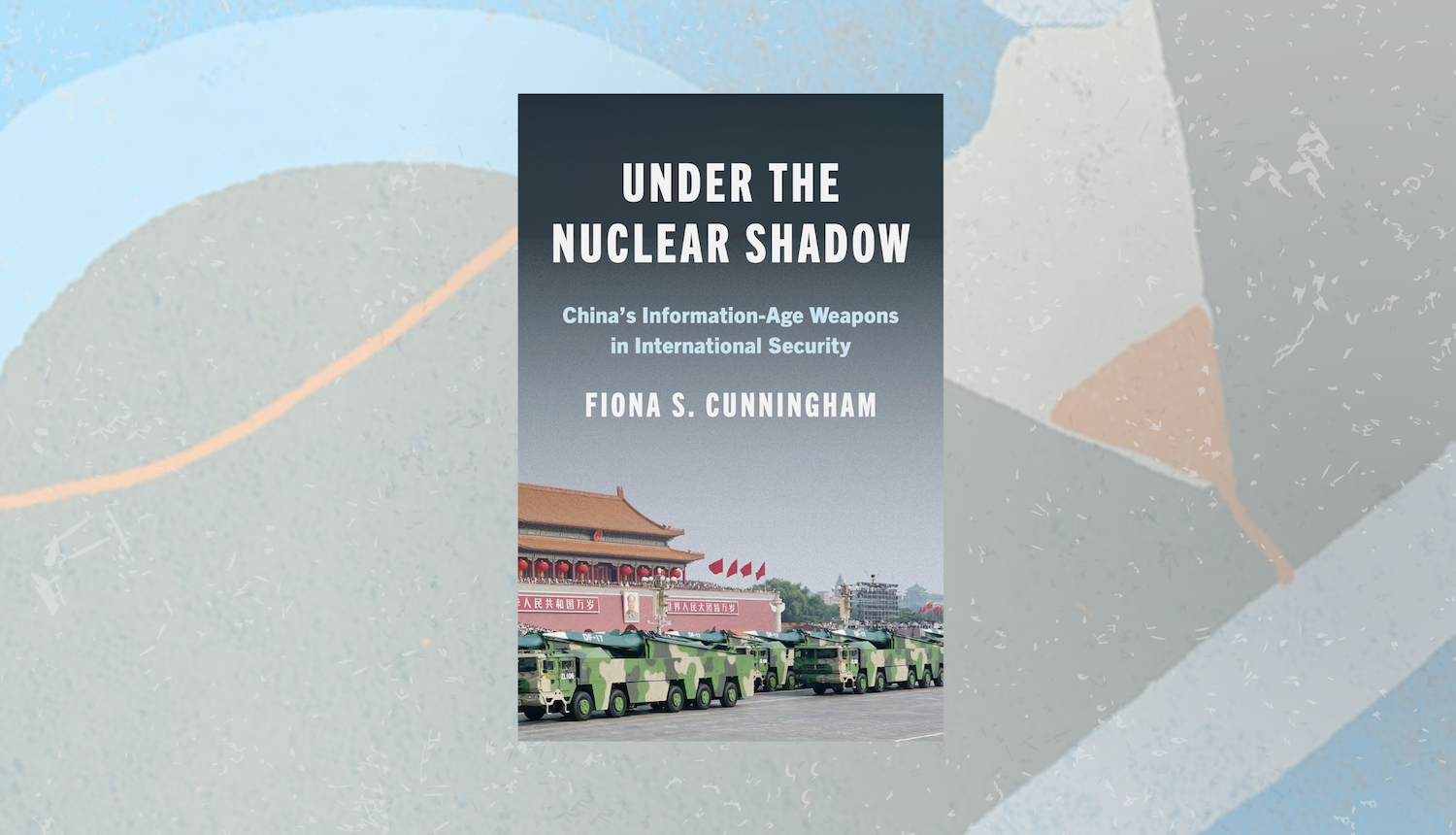
Fiona Cunningham’s ‘Under the Nuclear Shadow: China’s Information-Age Weapons in International Security’ examines how China, and nuclear-armed states more broadly, can pursue alternatives to nuclear threats or conventional military dominance. More specifically, states can gain leverage through the use of non-nuclear weapons capable of producing strategic results. Cunningham’s theory of ‘strategic substitution’ describes the pursuit of said weapons during confrontations between nuclear states. They offer an alternative to nuclear first use or deploying conventional forces capable of winning a war.
The author draws on a wide array of sources, including Chinese policy and doctrine documents and expert interviews, to deliver a nuanced analysis of both the decision-making process and outcomes relating to information-age weaponry in the Chinese military.
An overview of information-age weapons
Cunningham identifies three capabilities that can substitute either threats of nuclear use or conventional military superiority, referring to them as ‘information-age weapons’: precision-guided conventional missiles, offensive cyber operations, and counterspace capabilities. The latter aim to prevent an adversary from using outer space for civilian or security purposes.
These weapons can target vital infrastructure and key communication systems, such as nuclear command, control, and communications (NC3), and they are much more adaptable in their application compared to deploying nuclear weapons or attempting to win a confrontation through conventional superiority. Hence, they often prove more believable than nuclear threats in scenarios where a nation’s existence is not at stake, as an adversary could legitimately question whether a country would risk mutual destruction.
While the primary topic of Cunnigham’s research is a confrontation between nuclear-armed states, one cannot deny the importance of strategic substitution for a broader range of scenarios, for example, when considering the current position of the United States administration and its possible diminishing involvement in European defence. Information-age weapons may present a viable alternative for states unable to pursue nuclear capabilities in the near term, offering effective means of strategic response. Consequently, the framework of strategic substitution is likely to be increasingly significant for countries facing dilemmas related to managing escalation under the shadow of nuclear confrontation.
The author analyses the deployment of information-age weapons through two lenses: their use in strategic signalling (either aggressive brinkmanship or more cautious, calibrated escalation) or warfighting. Cunningham’s ability to define the criteria for assessing each capability is an additional strength. Evaluating the true intent behind the development of specific military capabilities is an inherently difficult task, given the secrecy surrounding strategic planning and the actual potential of weapon systems.
Cunningham discusses whether information-age weapons can achieve the same leverage as conventional military superiority or the threat of nuclear first use. Attacking critical infrastructure through cyber operations is a quick way to disrupt utilities and communications and intimidate civilian populations, even if the impact is short-lived.
Counterspace capabilities can interfere with systems that rely on satellites, such as communication, weather monitoring, positioning, navigation, and intelligence. Anti-satellite weapons affect not only directly targeted assets but wider space, due to debris from strikes.
Finally, conventional missile attacks can strike high-value targets such as critical infrastructure, military installations, or government sites while also terrorising the civilian population.
The role of cyber operations
Unlike traditional kinetic methods, cyber operations can be designed for temporary disruptions or physical destruction. However, this versatility presents challenges regarding strategic coercion. Effective deterrence relies on transparency and the visible demonstration of capabilities, yet operational secrecy is crucial to preventing adversaries from developing countermeasures.
Cunningham briefly examines the Volt Typhoon case and the prepositioning of cyber assets for potential disruption. While the author notes that the United States viewed this as indicative of China’s coercive cyber strategy, it is important to recognise the nuanced role of signalling. It is likely that Volt Typhoon was intended to remain undetected to preserve access to critical systems. Although its capacity for strategic impact is considerable, its value in signalling and deterrence may be limited and at odds with the objective of conducting effective disruptive operations if conflict materialises.
Another aspect of cyber operations is the viability of deployment of destructive attacks before conflict emerges and without need for movement of troops. The examples of the Viasat satellite internet attack prior to the February 2022 Russian invasion of Ukraine (a notable example of cyber disruption of space-based capabilities) and the cyberattacks targeting Venezuelan critical infrastructure before the US operation to capture Nicolás Maduro, suggest that during a major confrontation, the primary role of cyber operations is auxiliary to kinetic operations, such as disrupting communication or energy systems.
Given that its conventional forces may not match those of the United States, it is debatable whether China would risk losing capabilities that could support military operations during an actual escalation.
Strategic substitution or complement?
Can information-age weapons genuinely serve as substitutes for the leverage achieved through conventional military superiority or the threat of nuclear first use? Cunningham clearly and convincingly presents the case that each type of information-age weapon may produce extensive strategic impacts by disrupting critical communications infrastructure and intimidating civilian populations.
However, the question remains whether the effects of these strategies are enough to replace deterrence originating from the threat of nuclear strikes or conventional dominance. This issue is particularly relevant given the expansion of China’s nuclear arsenal – it implies that information-age weapons offer increased flexibility rather than complete strategic substitution.
Furthermore, Cunningham suggests that deploying information-age weapons signals a willingness to escalate a conflict, potentially bringing the nuclear threshold closer. By combining various methods of achieving strategic effects prior to nuclear threats, states are afforded a significantly broader range of options at every stage of escalation. For example, as information-age weapons can target and disrupt nuclear command, control, and communications, a state can engage the adversary’s nuclear forces while avoiding the destructive effects of nuclear or conventional capabilities.
This is arguably one of the book’s most consequential arguments. The strategic potential of information-age weapons changes the playing field for nuclear-armed states, but perhaps even more so for smaller countries that cannot hope to achieve nuclear deterrence any time soon. The ability to develop capabilities quickly at a relatively lower cost makes strategic substitution attractive to countries other than nuclear-armed states when managing escalation against adversaries.
A path forward for strategic capabilities
Cunningham outlines three potential future courses of action in terms of the role and significance of strategic substitution in China’s strategy: sustained investment in strategic substitution, adoption of a first-use nuclear policy, and pursuit of conventional military supremacy. Notably, these strategies are not necessarily mutually exclusive.
Maintaining nuclear retaliatory capability alongside parity in conventional forces, while simultaneously developing information-age weapons, could result in a substantially strengthened deterrence posture compared to relying on any single approach. How investments are allocated among these options will indicate the extent to which information-age weapons can serve as independent sources of strategic leverage.
Altogether, the book serves not only as a comprehensive discussion of Chinese military development but also as a valuable reference for analysis of historical context, doctrine, and the placement of specific capabilities within China’s armed forces. ‘Under the Nuclear Shadow’ is an essential resource for those seeking insight into China’s military posture and the impact of emerging capabilities on strategic escalation management. The evolving landscape of China’s nuclear arsenal, advancements in cyber technology, and the pivotal role of IT infrastructure in both civilian and military sectors make this book particularly relevant.
‘Under the Nuclear Shadow: China’s Information-Age Weapons in International Security’(2025) by Fiona S. Cunningham is published by Princeton University Press.